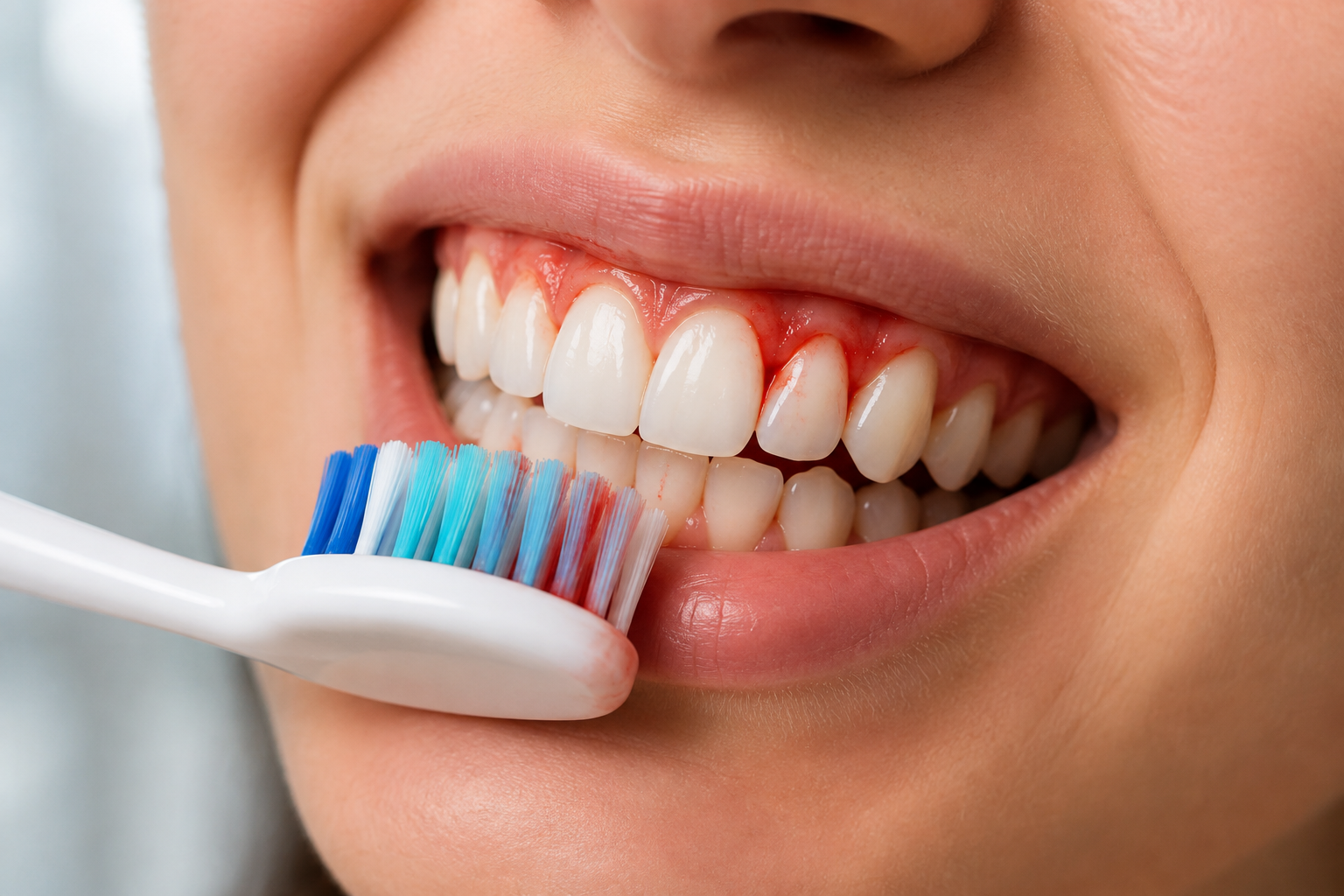
Have you ever noticed a little blood on your toothbrush or in the sink after brushing your teeth? It can be easy to dismiss it, especially when there is no pain. But healthy gums generally should not bleed during normal brushing.
Occasional bleeding can happen because of irritation, brushing too hard or changes in your oral hygiene routine. However, repeated gum bleeding may indicate inflammation or an underlying dental problem that needs attention.
Understanding why your gums bleed is the first step towards getting the right care.
Bleeding gums treatment depends on what is causing the bleeding. In many cases, persistent bleeding is associated with plaque buildup and inflammation of the gums. If the problem progresses, it may develop into gum disease, which can affect the tissues supporting your teeth.
The important thing is not to ignore recurring bleeding simply because it is painless. Early attention can often make treatment simpler and help prevent the problem from becoming more serious.
Common Causes of Bleeding Gums
There are several reasons your gums may bleed while brushing or flossing.
Plaque Buildup
Plaque is a sticky layer of bacteria that constantly forms on your teeth. When it is not removed properly, it can collect around the gumline and irritate the surrounding tissue.
This may cause gums to become red, swollen and more likely to bleed during brushing.
Gum Disease
One of the most common causes of persistent gum bleeding is gum disease.
Early gum disease can cause inflammation, redness, swelling and bleeding when you brush or floss. If left untreated, the condition can progress and affect the structures that support your teeth.
This is why recurring bleeding deserves a dental evaluation rather than simply changing your toothbrush.
Brushing Too Hard
More pressure does not necessarily mean cleaner teeth.
Using a hard bristled toothbrush or brushing aggressively can irritate the gums and cause minor bleeding. Gentle brushing with the right technique is generally a better approach for protecting your gums.
Inconsistent Oral Hygiene
If you have recently started flossing after not doing it regularly, you may notice some bleeding initially. This can happen when the gums are inflamed.
Instead of stopping completely, gentle and consistent cleaning is usually important. However, if bleeding continues, becomes heavier or is accompanied by swelling and discomfort, professional dental advice is appropriate.
Dental Plaque That Has Hardened
When plaque remains on the teeth for an extended period, it can harden into tartar. Tartar cannot be removed effectively with ordinary brushing alone.
A professional cleaning may be required to remove this buildup and allow the gums to recover.
What Does It Mean When Your Gums Bleed Every Day?
Bleeding that happens repeatedly should not be considered normal.
If your gums bleed almost every time you brush, particularly when you also notice swelling, redness, tenderness, bad breath or changes around your teeth, it is worth arranging a dental examination.
A dentist can examine your gums, check for plaque and tartar accumulation and determine whether there are signs of gum disease or another oral health concern.
When Should You See a Dentist?
A small amount of bleeding after brushing does not always mean you have a serious dental problem. The pattern matters.
Consider seeing a dentist if:
- Your gums bleed frequently
- The bleeding continues despite improving your brushing routine
- Your gums appear swollen or unusually red
- You have persistent bad breath
- Your gums feel tender
- You notice changes around your teeth
- You have not had a dental examination for a long time
Early evaluation can help identify the cause before it develops into a more complicated problem.
How Is Bleeding Gums Treatment Done?
There is no single treatment that works for every case. The appropriate bleeding gums treatment depends on the condition of your gums and the reason behind the bleeding.
Professional Dental Cleaning
If plaque and tartar are contributing to gum inflammation, a professional dental cleaning may be recommended.
Removing deposits around the gumline can help create a healthier environment for the gums and make daily oral hygiene more effective.
Improving Brushing Technique
Your dentist may also recommend changes to your brushing technique.
A soft bristled toothbrush, gentle pressure and careful cleaning along the gumline can help reduce unnecessary irritation while still removing plaque.
Treatment for Gum Disease
When bleeding is related to gum disease, treatment may involve professional cleaning and improved daily oral care. More advanced gum problems may require additional dental treatment based on the condition of the gums and supporting tissues.
The earlier gum disease is identified, the easier it is generally to manage.
How Can You Prevent Gum Bleeding?
Good oral hygiene plays an important role in keeping your gums healthy.
Brush your teeth regularly using gentle movements and pay attention to the gumline. Clean between your teeth as recommended by your dental professional, since a toothbrush cannot effectively reach every surface.
Regular dental examinations are also useful because problems such as plaque buildup and early gum inflammation may not always cause noticeable symptoms.
Most importantly, do not stop brushing simply because your gums bleed. If brushing is uncomfortable or bleeding persists, speak with a dental professional rather than avoiding the area.
Can Bleeding Gums Heal on Their Own?
Minor irritation may improve when the cause is removed and oral hygiene becomes more consistent. For example, gums irritated by overly aggressive brushing may settle after switching to a gentler technique.
However, persistent gum bleeding should not be assumed to be temporary.
If the bleeding continues, a dental examination can help determine whether plaque, tartar, gum disease or another issue is responsible. Treating the underlying cause is more useful than simply trying to stop the bleeding symptom.
Why Ignoring Bleeding Gums Can Be a Mistake
It is common to think that bleeding gums are simply a consequence of brushing too hard. Sometimes they are. But repeated bleeding can also be one of the earliest noticeable signs of gum inflammation.
Waiting until there is significant pain can mean waiting too long. Gum problems do not always cause severe discomfort in their early stages.
Paying attention to changes in your gums and seeking timely dental treatment when necessary can help protect your oral health in the long term.
FAQs
Is it normal for gums to bleed while brushing?
Occasional minor bleeding can occur because of irritation or changes in your oral hygiene routine. However, frequent or persistent bleeding is not something you should routinely ignore and should be evaluated by a dentist.
What is the most common reason for bleeding gums?
Plaque buildup and gum inflammation are common causes. Aggressive brushing, tartar accumulation and inconsistent oral hygiene can also contribute to bleeding.
Should I stop brushing if my gums bleed?
Generally, you should not stop cleaning your teeth because your gums bleed. Gentle brushing is important for removing plaque. If bleeding continues, consult a dentist to identify the underlying cause.
How long does it take for bleeding gums to improve?
The timeframe depends on the cause. Mild irritation may settle after improving brushing technique and oral hygiene, while bleeding associated with gum disease may require professional bleeding gums treatment.
Can bleeding gums be a sign of gum disease?
Yes. Persistent bleeding, particularly when accompanied by redness, swelling or tenderness, can be associated with gum disease. A dental examination can determine whether gum disease is present.
What type of dental treatment may be needed for bleeding gums?
Treatment depends on the cause. It may include professional cleaning, improved oral hygiene techniques or other dental treatment when gum disease or another dental condition is involved.
To Wrap It Up
Seeing blood when you brush your teeth is easy to overlook, but recurring gum bleeding deserves attention. While irritation from brushing or changes in your oral hygiene routine can sometimes explain it, persistent bleeding may be a sign of gum disease.
The right bleeding gums treatment starts with identifying the underlying cause. Maintaining gentle daily oral care and getting your gums examined when bleeding continues can help prevent a small concern from becoming a larger dental problem.
If your gums have been bleeding regularly, consider scheduling a dental examination so the cause can be identified and appropriate dental treatment can be recommended.
If you provide the actual internal and external URLs, I can embed them into the supplied keyword phrases without displaying the URLs themselves.